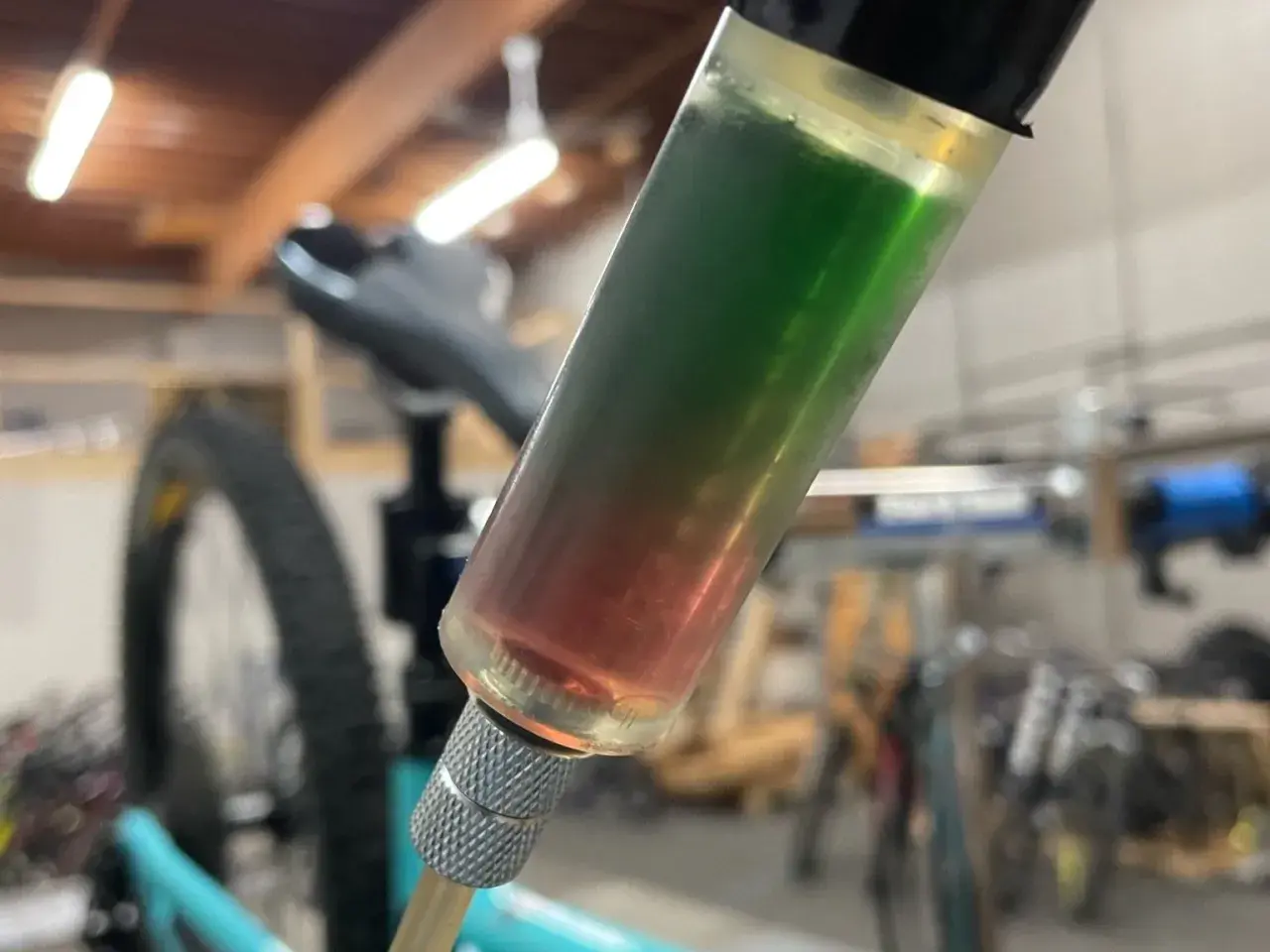
Brake fluid is one of those bike-maintenance details that looks minor until the wrong bottle goes into the wrong system. This guide explains synthetic brake fluid compatibility in MTB and off-road brakes, how DOT and mineral-oil systems differ, what is safe to mix, and how to check your own setup before a bleed. The useful rule is simple: the brake cares about chemistry, seal design, and service tools, not about marketing language on the bottle.
The practical rule is simple and unforgiving
- DOT and mineral oil are not interchangeable. A brake is built for one family or the other.
- Shimano mineral-oil systems do not take DOT fluid, and some Shimano models require low-viscosity oil rather than standard mineral oil.
- SRAM DOT systems use DOT 4 or DOT 5.1 when approved, but not DOT 5 silicone.
- If the fluid type is uncertain, identify the brake before you top up or bleed anything.
- Keep separate syringes, funnels, and bleed blocks for each fluid family.
What compatibility really means on a mountain bike
When I talk about compatibility, I am not just asking whether a liquid can physically flow through the hose. I am checking three things: whether the fluid chemistry matches the brake design, whether the seals and internal parts were built for that chemistry, and whether the service kit stays clean enough to avoid cross-contamination.
- Fluid chemistry decides whether the system can safely live with DOT fluid or mineral oil.
- Seal design matters because the wrong fluid can swell, harden, or degrade internal rubber components.
- Service tools matter because a syringe that has seen the wrong fluid can contaminate the next bleed.
That is why the bottle label alone never tells the whole story. Brand names help, but the model-specific spec is the real reference point, and the next step is to map that spec to the fluid family your brakes were built around.
Which fluids belong in which systems
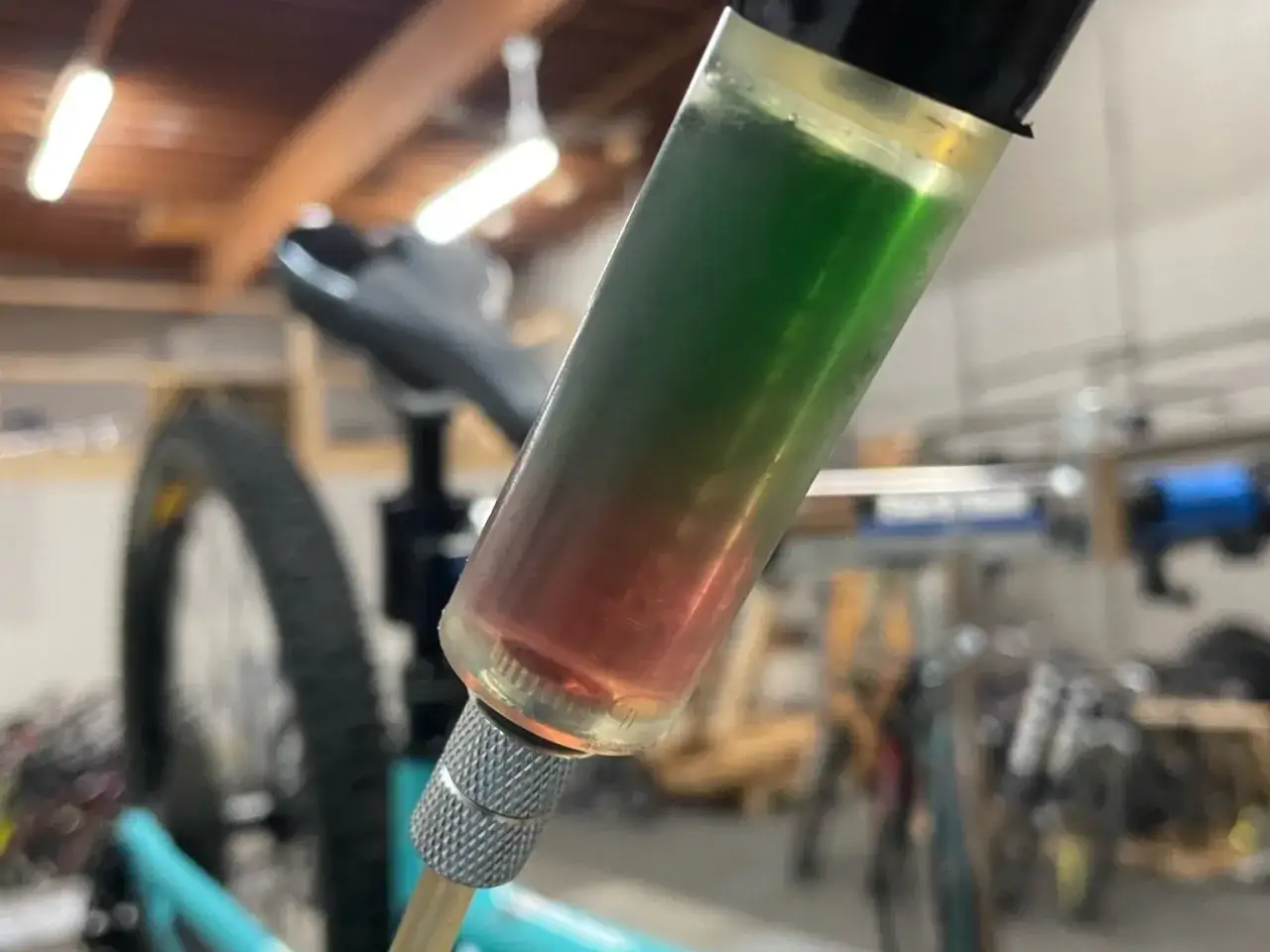
On bikes, the split is mostly between DOT-based brakes and mineral-oil brakes. The label on the bottle matters less than the system the brake was designed for, and the safest choice is always the fluid family named by the manufacturer.
| Brake family | Usually compatible | Do not use | My note |
|---|---|---|---|
| DOT-based hydraulic brakes | DOT 4 or DOT 5.1, if the manufacturer approves that rating for the model | Mineral oil, DOT 5 silicone, or any generic “universal” fluid | Common on SRAM/Avid-style systems, and brand-to-brand DOT compatibility is often broader than mineral-oil compatibility |
| Standard mineral-oil brakes | The manufacturer’s specified mineral oil | DOT fluid | Typical on Shimano and Magura systems |
| Shimano low-viscosity models | Shimano low-viscosity oil for the exact model | Standard mineral oil unless the manual explicitly allows it, plus all DOT fluids | The viscosity spec matters here, not just the chemistry family |
| Unknown or mixed builds | Nothing until identified | Any top-up fluid | Verify both ends of the hose before service |
That table hides an important nuance: a DOT system can sometimes accept another brand’s DOT 4 or DOT 5.1, but mineral-oil systems are far less standardised. I treat that as a reason to be stricter, not looser. The same family name does not automatically mean the same lever feel, the same service interval, or the same approval from the brake maker, and that takes us straight to the damage you can do by guessing.
What goes wrong when you mix fluids or guess
The failure mode is not always instant, which is exactly why this mistake survives workshop shortcuts. A brake can feel fine on the stand and then turn vague, sticky, or inconsistent once heat, vibration, and trail braking load the system.
The usual problems are not subtle:
- The lever can feel spongy or wander farther than normal.
- Pistons may retract poorly or stick in the caliper.
- Seals can swell, soften, or become brittle depending on the wrong fluid.
- DOT spills can damage paint and decals if they are not cleaned immediately.
- In some cases, the only safe fix is a full strip, fresh seals, and a rebuild.
One thing I never do is “flush it with something else and hope.” If the wrong fluid has gone into the system, the safe response is to remove the contamination, inspect the seals, and rebuild properly rather than stacking one mistake on top of another. DOT 5 silicone is a separate trap here as well: it is not a substitute for DOT 4 or DOT 5.1 in bicycle brakes that call for those fluids.
Because the damage is not always obvious right away, the smartest move is to identify the brake before I touch the reservoir or the bleed port.
How I check a bike before I open a bottle
Used bikes, mixed builds, and workshop hand-me-downs are where most fluid mistakes happen. My habit is to verify the system first, then open the bottle.
- Read the model number on the lever and caliper.
- Check the manufacturer manual or compatibility chart for that exact model.
- Confirm whether the system wants DOT fluid, standard mineral oil, or low-viscosity oil.
- Look for mixed-brand parts, because a lever swap or caliper swap can change the spec.
- Ignore colour and smell as identifiers; they are not reliable enough.
- Label the bleed kit so it stays dedicated to that fluid family.
I do not trust the previous owner’s memory, and I do not trust a half-used bottle with no clear label. In a UK workshop, waiting one day for the right fluid is cheaper than undoing a contaminated bleed, and once the system is identified, the job becomes much simpler: keep the fluid and the tools clean, fresh, and dedicated.
Service habits that keep braking consistent
Once the right fluid is confirmed, consistency comes down to storage and cleanliness. DOT fluid is hygroscopic, which means it absorbs moisture from the air after opening, so I prefer smaller bottles that I can finish without leaving them sitting around. Mineral oil is less fussy about moisture, but it still needs a clean, sealed container and a bleed setup that has never been contaminated.
I also keep separate workshop gear for each family. One syringe set for DOT, one for mineral oil, and no sharing between them. That is a small habit, but it avoids the kind of cross-contamination that turns a quick maintenance job into a full teardown.
For usage intervals, I stay practical rather than dogmatic. DOT brakes on hard-used MTBs are worth bleeding at least annually, and sooner if the lever feel changes or the bike sees lots of wet, muddy riding. Mineral-oil systems are often serviced when the lever feel changes, after hose or component replacement, or when the brake starts to feel less crisp than it should. If the bike has just come through a winter of grit and rain, I would rather inspect early than wait for the trail to tell me something is wrong.
The last habit is the boring one that saves parts: wipe spills immediately and keep fluid off pads, rotors, and painted surfaces. That matters more than most riders think, because a clean bleed is only clean if the whole work area stays controlled.
What I do when the fluid history is unknown
Used bikes are the awkward case, especially if the hose has been shortened, the lever has been swapped, or the bike came from a previous owner who “just used whatever was on the shelf.” In that situation, I assume nothing until the system is identified.
- I do not top up with the nearest bottle.
- I check the lever and caliper models against the manufacturer spec.
- If the wrong fluid may have been added, I plan on a proper flush and inspection rather than a quick bleed.
- If the brake still feels suspect after the correct service, I replace the affected seals or contaminated parts instead of trying to rescue them.
That is the real takeaway from this whole compatibility question: the safest fluid is the one the brake was designed for, and the safest workshop move is to verify before you pour. If you are unsure, stop, identify the system, and use the exact fluid family the manufacturer built into the brake, because that is what keeps the lever feel consistent and the bike reliable on the trail.